Vocal Recordings and Artist Interviews
21 February 2025, Friday
The second day, the team was focusing on recording vocals only. The absence of instruments brought out that distinct texture of southern African vocal harmonization. Something that bothered on the sound of Imbube, the root of Mzansi’s darling sound, Isicathamiya, made world famous by Ladysmith Black Mambazo.
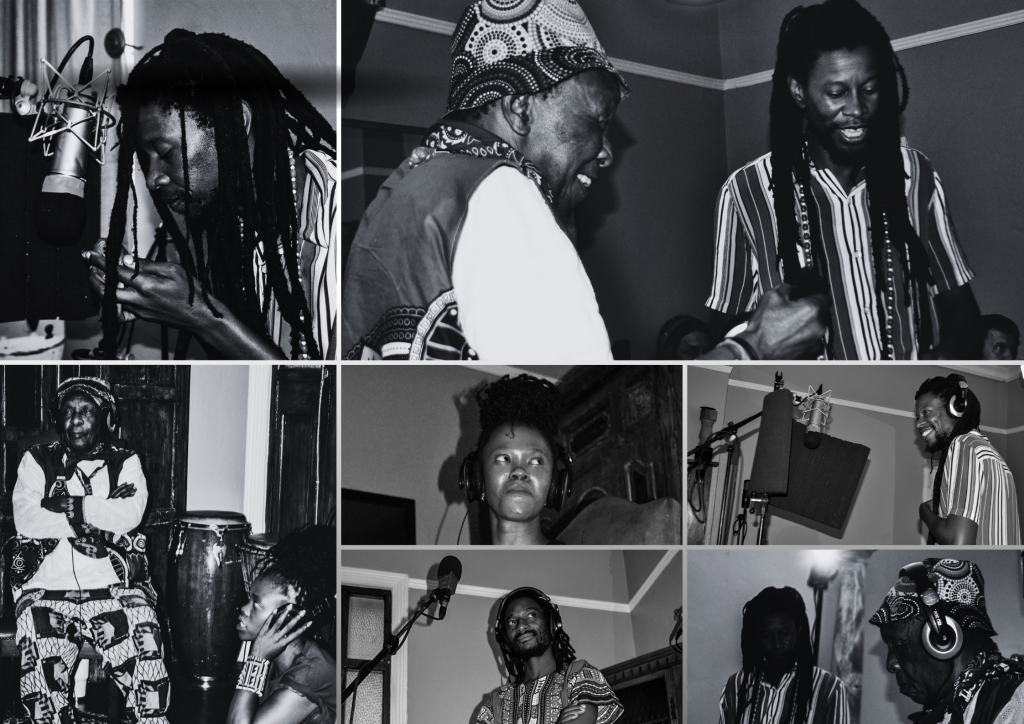
“Ngicela ukungena ngesicathamiya…[Can I come in with Isicathamiya]” requested Bafo when a vocal recording of Xaba, Nkosi and Makhene inspired something in him. Xaba made a fuss about first adding harmonies, “Cha…angithi mina…isicathamiya lesi[No…don’t I…this is isicathamiya]”, Bafo urged on like a child only learning to speak.
Finally Xaba said, come now while you hear it. But again Xaba, now joined by Makhene made another fuss. Bafo left the youngins alone and carried on with his thing. He stood by the microphone and Xaba asked him, ”Can I hold your phone?” Bafo handed it to him and commanded for it to be switched off. “I’ll put it on flight mode” Xaba rather suggested, but Bafo urged, “Hhayi, isicathamiya phela lesi[No, this is isicathamiya]”. With that, the reverence of Isicathamiya was re-instilled in the young.
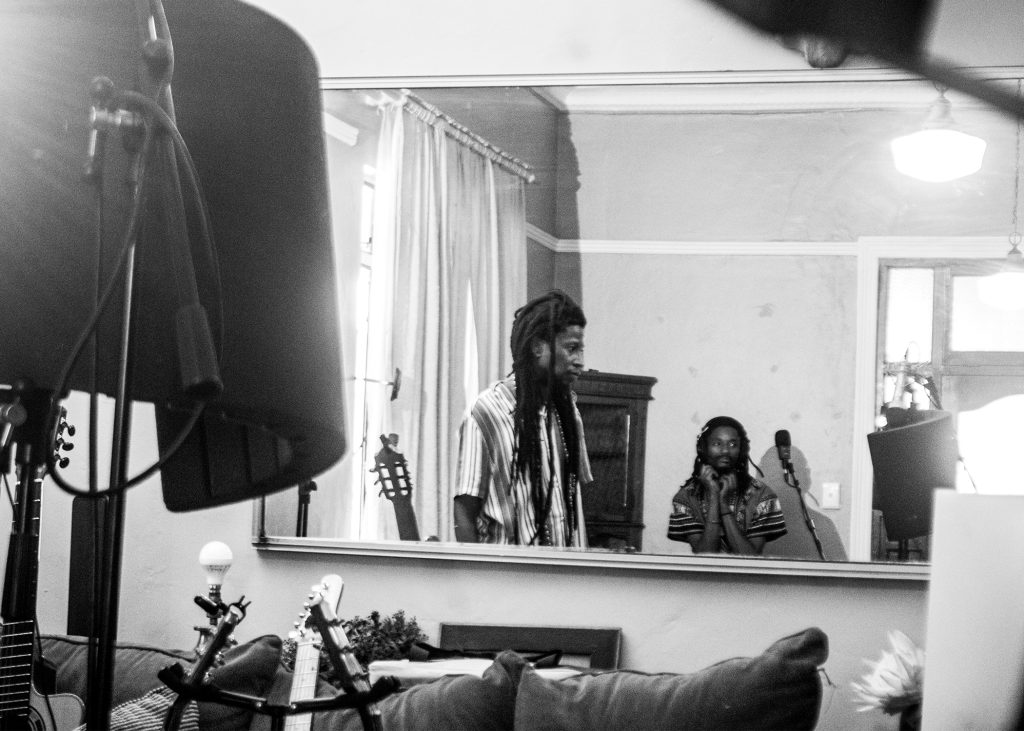
Makhene and Nkosi started to lay the harmonies Xaba was talking about, picking up from the “Malume, malume…”Then Bafo’s voice started to crawl under their harmony, like an underground creature crawling from the belly of the earth, looking for light to feast on.
The “malume, malume…” of the backers had turned into some what of a “Maluweh, maluweh”. Bafo shifted the room with his own “maluweh” more, with a voice brewed by time, manly habits and strange travels of paths that only a true Bluesman can swallow.
While he maluweh’d, something hit me. And I thought, this is it. This is it. This is how it must have felt at the Gallo studios when Solomon Linda and The Evening Birds recorded the classic Imbube. Which the “Imbube, Imbube…” was later recorded as ”Wimoweh, wimoweh…” by Americans who couldn’t speak IsiZulu, which the original Imbube was sung in.
So this is how big things are born. This is it. In front of me, though seeing is never believing for me. Never. But the ear, it always defeats me. No matter how high my skepticism can build up walls of Jericho, it’s the sound that always sends them crumbling down like grains of send. That sound was what would later be Usho Njalo.
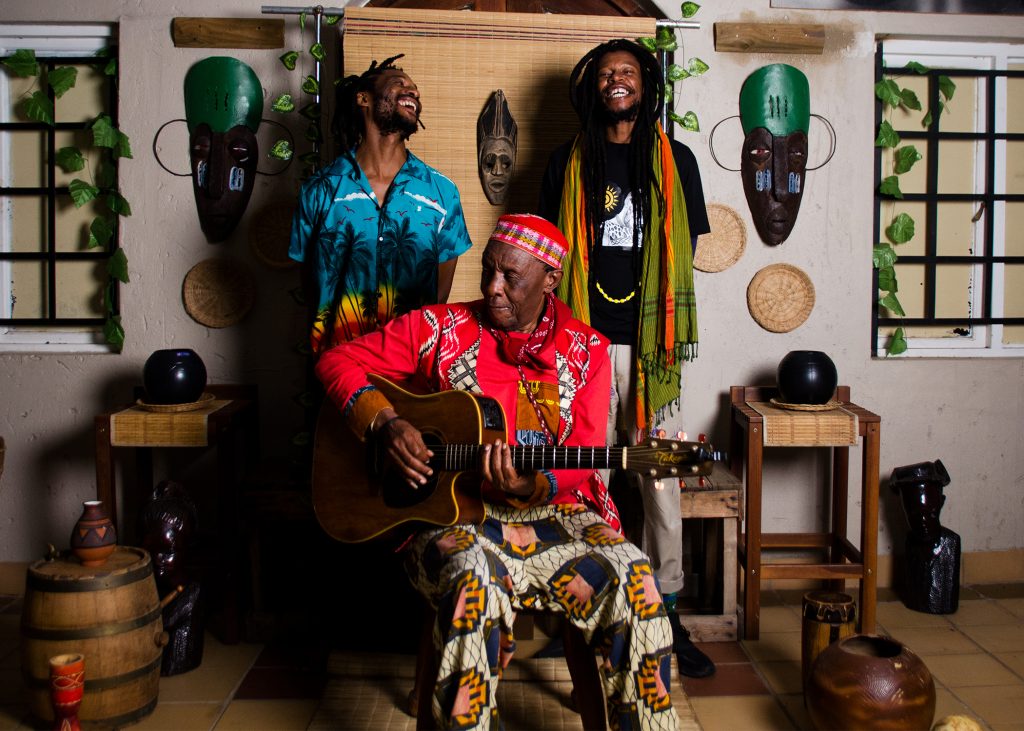
During the interviews with the filming team, when Xaba was asked, “What do you want listeners to take away from this album?” He emphasized elderly people, “For us it’s, elderly people are so important…we need to stay close to them…respect and prioritize them. There’s still so much to learn, the wisdom.”
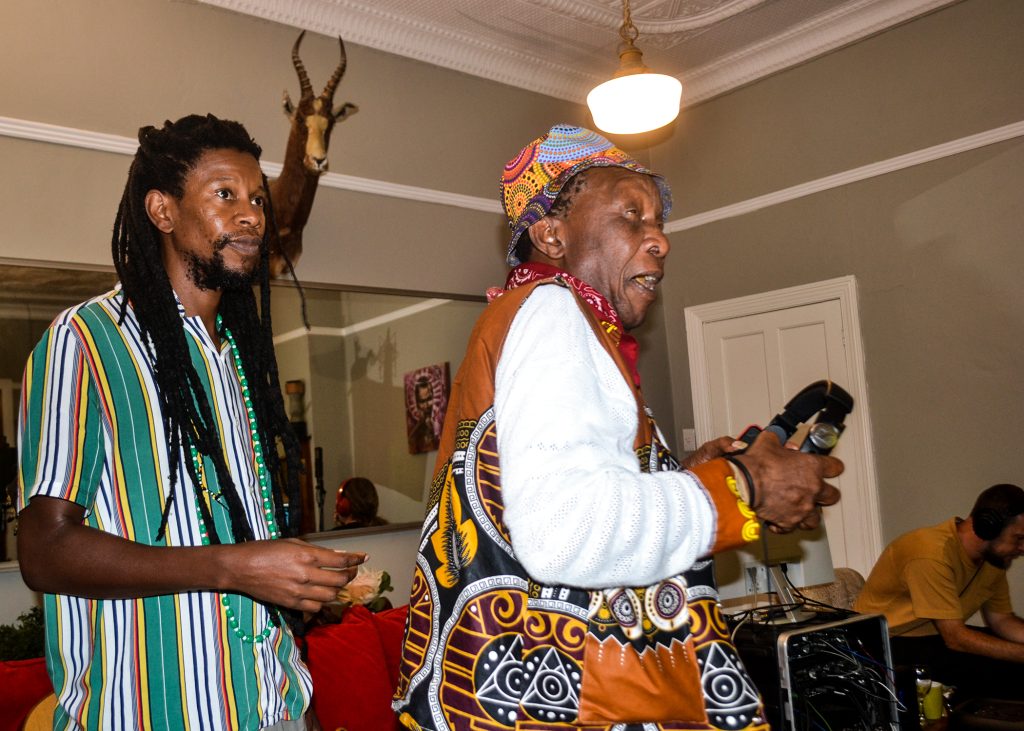
When Bafo was asked about the type of music they were working on, he brought up his own sound, “The type of music I make is called Madalaline music. It’s IsiNtu music, but I tried by all means to make it music that would be loved even in other places like Europe and U.S.A,” as Bafo’s music is also strongly inspired by Blues, Jazz, and World Music as well.
“But what we are doing here with Shwabada and Makhene, is new music we’ve never played before. It makes me happy that we are playing a new thing, though leaning on Madalaline Music.”
Makhene shared how the environment of Kwantu Village contributed “HUGELY” to the sound that came out of the whole album.
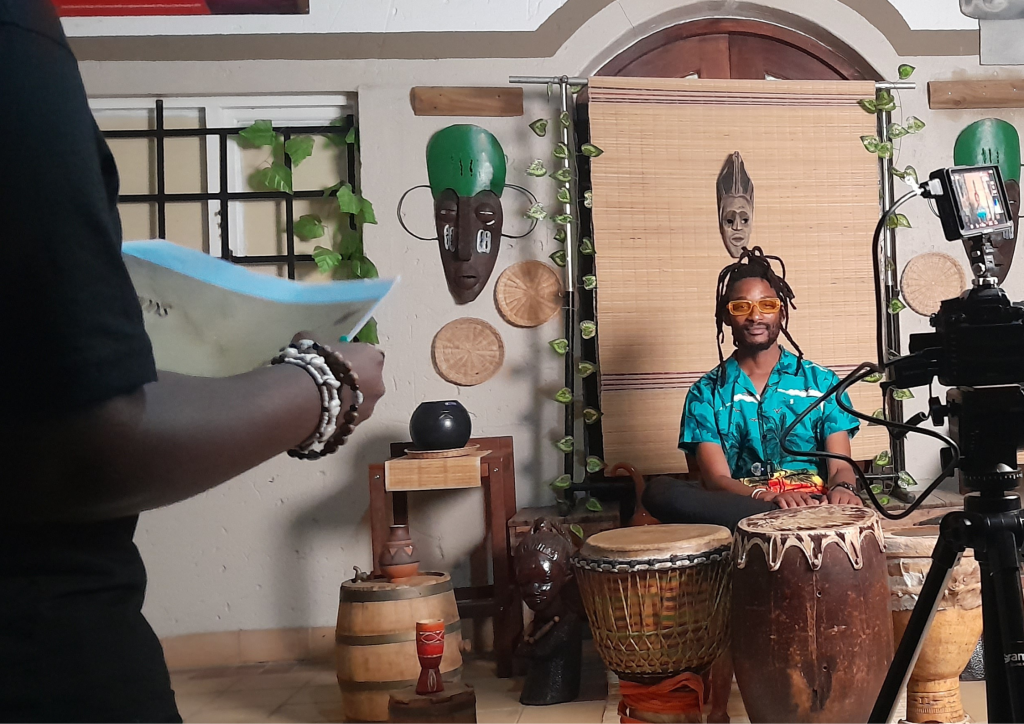
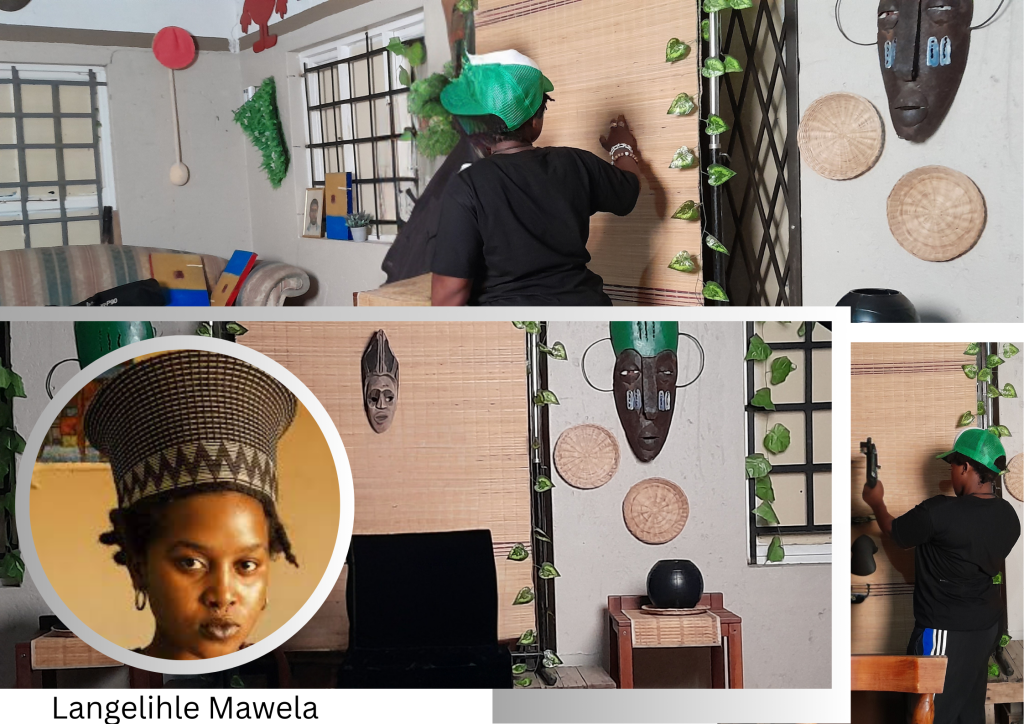
For the interview set, the Creative Director for the filming team, sisi Langelihle Mawela had designed an Afrocentric set right at Kwantu Village’s Langalibalele Concept Space. With artifacts sourced from the space, we prepared a set that she said, “This is one of the best work I have ever done.”