

The Messengers
Sawubona.
Some hip hop is made for those living on the earth, some is made for those living above it, but time and time again, we come across MCs who can make hip hop that can go to those living under earth.
And not just any earth: but the gold, platinum and rhythm rich earth of southern Africa. So this is underground hip hop as in, underground hip hop.
We hear Izithunywa Zohlanga – have always belonged in that third category.
Formed in the Eastern Cape by mnumzane Luyolo Lenga and mnumzane Pumelele Lavisa, two musos who grew up digging the great rappers together, so did they go to school, up to the University of Fort Hare, where they studied African Music and Literature.
2006: Iingqondi Zenkcubeko
In February 2006, they released their debut album, Iingqondi Zenkcubeko. A product that was a very brave one, in sound, content and context. Fat, dark and deep beats, melted Xhosa prose that’s not afraid to speak punches to power, and said in such a way that even an 18th century scribe of Inkcubeko would say in his time. That is how far back Izithunywa Zohlanga can cypher their way through.
Iingqondi Zenkcubeko, was a 15 piece project that introduced us to traditional intellectuals, that we didn’t know we had to wait 20 years to hear from again.
But maybe, when you’re able draw exactly what you needed to, you don’t need to do it more often.
They coined a term for their sound: Umculo Buciko – oratory music. A sub-genre, sort of like a Motswako or Spaza of it’s own, but rooted in something older. They even wrote a book by the same name.
While many rappers draw from street lingo, Izithunywa Zohlanga draw from Xhosa literature and oral tradition.
Pura explains it simply:
“We just did not want to dilute the pureness of the language.”
Live, Izithunywa Zohlanga are something to witness. A 2022 review captured their dynamic perfectly:
“…bringing life to African literature and the impact of modern issues through an ancient and oral method of storytelling“
2026: “Umqul’uvuliwe”
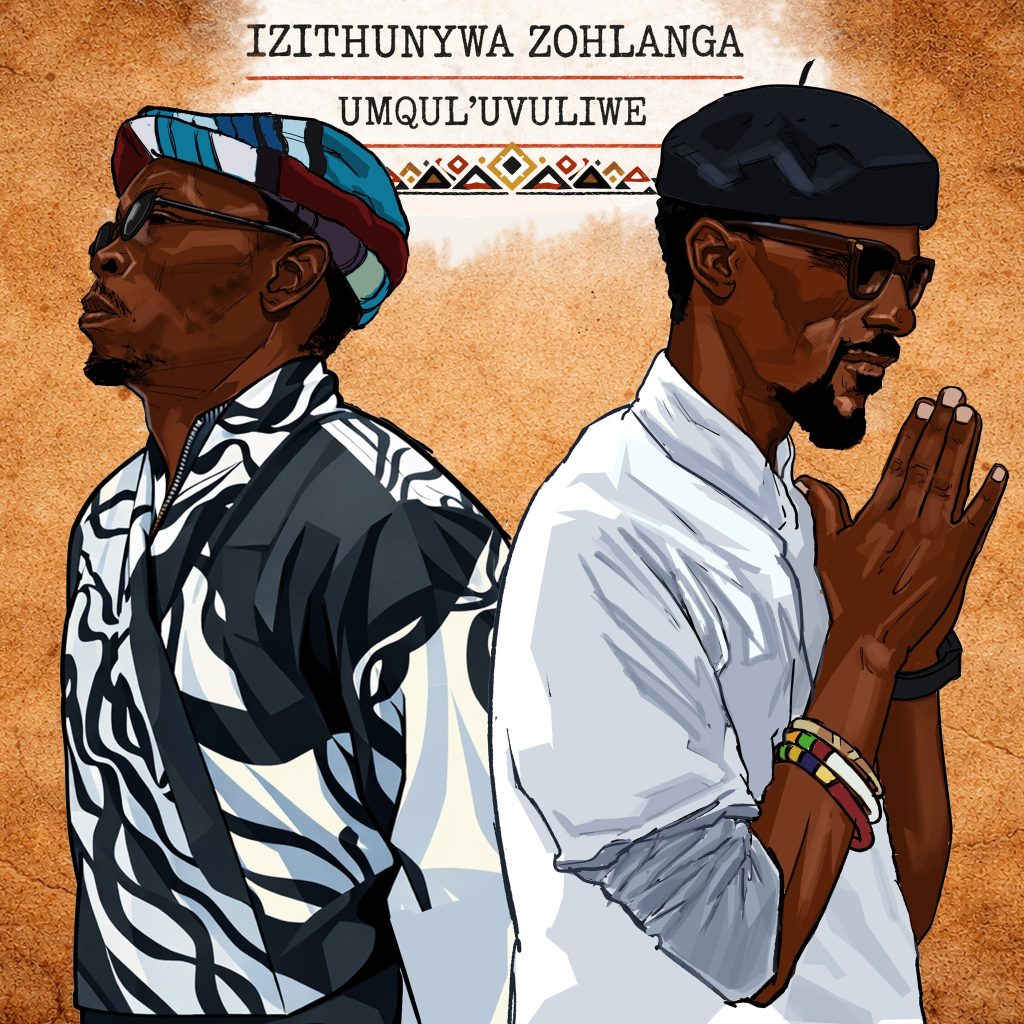
Now, twenty years later, Izithunywa Zohlanga bring us “Umqul’uvuliwe”. The traditional intellectuals have opened the great book, and it’s an innovative blend of hip hop, African indigenous music and raw earth.
Featuring some of the most important musicians of our BaNtu time. From Dr.Madala Kunene, mnumzane Sibusile Xaba, honourable Teba Shumba, H.I.M, nkosazane Azipheli Sakwe, and the late honourable Daddy Spencer.
Their music isn’t about sounding current, it’s about sounding like themselves –because how quick can some of us forget.
They incorporate indigenous instruments – uhadi, umrhubhe, umqanghi, ikatara – alongside modern production, creating a bridge between genres and generations.
Key Tracks:
Inkcubeko
Hip hop music with African chants and claps. Too much flow and they now let you know what they know about this, Inkcubeko, Culture.
Apart from throwing a spar with bars, they teach.
”Inkcubeko, lulwini lwesizalo, ubuzwe, sisiNtu, inkcubeko ayinagqibeko. iCamagu lokuzikhusela kwintsabalalo yomphefumulo.”– Lavisa
[Culture is the home language, nationality, isiNtu(The Way of Humanity/Men). Culture is without an end, a Camagu for shelter from the perishing of the soul.]
”Inkcubeko… ayihlali ndawonye iphenduka namaxesha…imbongi zanamuhla sizibiza i-MCs.” – Lenga
[Culture…does not stay stagnant, it changes with the times…praise poets of nowadays are called MCs.]
Do you remember that famous conversation between mnumzane Quincy Jones and the MC Kendrick Lamar? Where Jones schools Lamar that actually, rap started in South Africa. With the praise poets; specifically using the word “Imbongi”.
So whenever you find yourself annoyed by how many rappers can’t stop hyping themselves, blame it on the Ngunis’ vote of confidence in an individual.
Inkcubeko is that song of self-determination. The poets are paintings new cities for their people, using words, and that ol’ magic the magi in the form of imbongi has been gifted with.
Mna Ndiyigqawa
Laid back badass umxhenso to the core, a blueprint of what southern African hip hop could be. The sound is unmistakably African whether played yesterday, today or tomorrow.
Uhadi, which is one of the indigenous southern African bow instruments, going hand in hand with kicks that sound unmistakably hip hop. Xaba’s guitar and all. African indigenous hip hop to the bone.
There are reports that Prophet Ntsikana started preaching the Christian doctrine even before the arrival of European missionaries. Out of everything that came out of his blessed mouth before the arrival of others, is there any record of him spitting Mna Ndiyigqawa? From hook to verse. Bar to bar. Pound for pound.
Isaka lebhodi
This is the track where the artist that has assumed responsibility cyphers you into remembering who he is, like every other martial artist does before he kicks the air into kicking you in those Asian Kung Fu movies we love.
The tune starts with a bow instrument, that seamlessly swings into hip hop kicks and they go together as if bow instruments were intentionally made with hip hop also in mind. Pura starts barking bars, with enough energy to sculptor a half-mic-half-spear artefact out of stone. Spiritual Spaza that can be used as war chants for young man to boost their breath. As rap was known to be by the ancients, the craft of Imbongi, the praise poet.
“Bawo” featuring Madala Kunene and Mandisi Dyantsis
A melody of melodies, bringing mnumzane Dyantsis, the one you should never forget to bring along when you are singing a song asking for forgiveness.
With the strings of Dr.Madala Kunene affirming the plea in a Madalalined riff. What stands out the most on this song, is the melody.
Scholar Koketso Potsane once described their music as “the art of combat” – art that assumes responsibility, dealing with everyday issues like substance abuse, violence against women, and the struggle for equitable education.
You can purchase your copy of Umqul’uvuliwe on https://iziraps.bandcamp.com/album/umquluvuliwe