

Sawubona. I got to catch with ubhuti Zamokuhle Kubheka, a.k.a ShauniaC. We talked Rap, Newcastle Hip Hop and his debut album, Family, Friends and Foes.
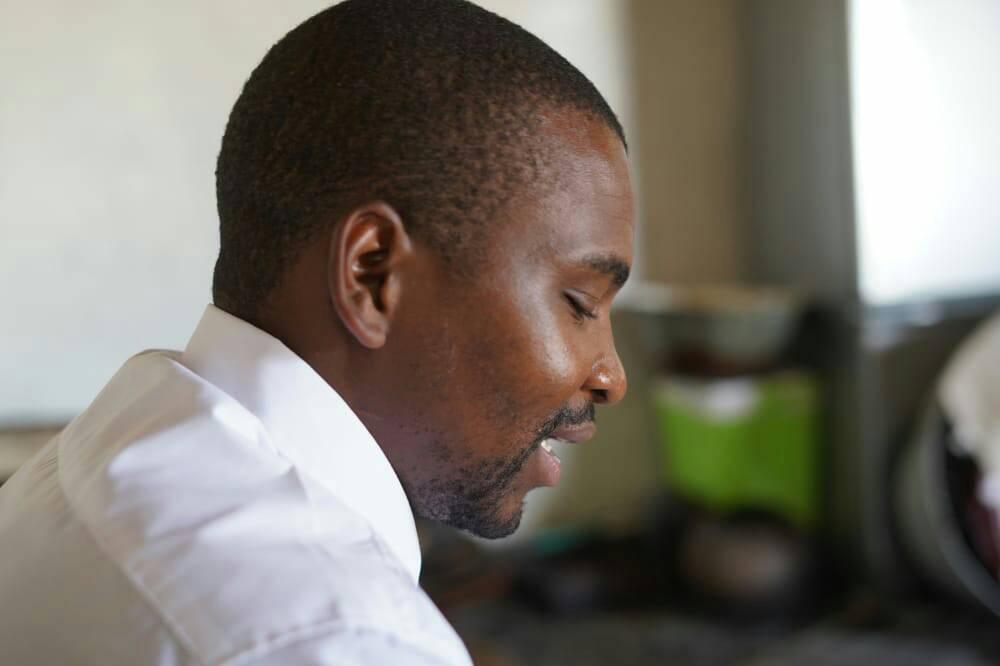
What emerged was a portrait of an artist forged in the cyphers of Madadeni, sharpened in the philosophy halls of Rhodes University, and now stepping out to make a statement with testament of an album.
1. Madadeni, Newcastle – paint me a picture of the place that raised you. What did that township teach you about life, loyalty, and survival?
Madadeni is actually an amazing place, beaming with potential. So much talented folks. From seeing Rap cyphers happen in every corner during the year 2006, where almost everyone was either a rapper or Hip Hop dancer – I rate that as the golden days of Madadeni Hip Hop: 2006 – 2011. I think in the township, I got the foundation of life.
2. Growing up in Madadeni, who were the voices you heard – in your home, on the streets, on the radio – that made you believe you could be a rapper?
I want to separate this into categories.
In the streets of Newcastle, Friz and Mape were my biggest influences. In South African Hip Hop, it was Proverb, Zola, and Zubz. Internationally, it was 50 Cent and Lil Flip.
Actually, I never got into it as wanting to be a rapper. I enjoyed Lil Flip’s music and 50 Cent and G-Unit. In Grade 7, I would go into class, sing the choruses, and then freestyle the verses because I did not want to be laughed at by my classmates.
In Grade 8 at Phendukani High School, I went to the toilet and saw a bunch of dudes rapping. I stood and listened. My new classmates said I could rap. I remember there was Mlaba, Mape, and Ex. I did the freestyling from my Lil Flip performances from Secondary Primary, and everybody celebrated my weak, nonsensical flow. Mape said I must stick to him to learn how to be a dope rapper.
3. Is there a specific memory from Madadeni that still finds its way into your raps, even now?
I don’t know if I do, because my raps include all my experiences I have heard in Newcastle. Some are from a decade ago, and some are recent, like a year or two back.
4. You left KZN to study in the Eastern Cape. Where and what did you study?
I went to Rhodes University to study Bachelor of Social Sciences, majoring in Philosophy and Psychology. Later on, I went back to do my PGCE.
5. The Eastern Cape has a deep history – literature, politics, oral tradition, consciousness. Did that environment shape the way you think and write?
I wouldn’t say it had some influence in my writing, but I would say it was such an amazing place when it comes to art. It is on a league of its own — from the conscious rappers that flood the underground scene, to the poetry sessions, the love for philosophy. It is the province for creatives. I mean people who do it for the love of the craft, not for the gains.
Eastern Cape is my second home. It just fuels the juices. It makes me want to continue with the craft and just fall in love with it again.
6. Was there a moment in the Eastern Cape – a conversation, a lecture, a late-night cypher – that shifted your understanding of what hip hop could be?
Yeah, I think my rap conversations with Zoyi and Mohato made me acknowledge the commercial part of rap. But the biggest one is with Ayabonga. He made me lay off the dope rapper approach to be “you”, and tell it the way you would like to listen to it. We spoke about Earl Sweatshirt a lot and his approach, shared songs just analysing raps.
I think him and Zinhle made me not stop the raps, because when I got to university I was done with rapping to make songs. I enjoyed rapping for myself.
I also got to include Somblacksins, because I never wanted to rap again as in make songs. But Somblacksins said, “I know you do not like fame and don’t want it, but maybe by telling your stories on songs you might help someone.” That statement is the reason we are here now with a project.
7. Your music carries philosophical weight. Were you always a thinker, or did life force you into reflection?
I think life forced me to be a thinker. To really try remember — I think I have always been into knowledge, but I can really pinpoint the moment I truly fell in love with being a thinker was when I became a Christian. That is when I started being into philosophy, reading books, wanting to know and experience the world and be in tune with Jesus.
8. Philosophy often asks questions without easy answers. Do you see your role as a rapper to provide answers, or to ask better questions?
Ask better questions. My raps are a mixture of two or more perspectives of viewing a situation and leaves you in a position to choose the better answer or to decide where you stand. When you listen to a song like Enemy, that is clear.
But I have to say, there are songs that I tend to make a statement or we could say place an answer, but it is not absolute. I leave space for you to engage it.
9. If you were to summarize your personal philosophy in one sentence, what would it be?
Always operate from a point of duty no matter what.
10. The title of your album Family, Friends and Foes presents three relationships that every human navigates. Which of these three has influenced this project the most?
If I had to choose between the three, it would be Foes.
11. Is there a track on this album that you almost left off – because it was too personal, too raw, too close to the bone?
Yes, it was the song Near Death Experience, which talks about a time when I got into a fight on behalf of my older brother and got stabbed several times.
12. If a listener in Madadeni, ten years from now, puts on Family, Friends and Foes, what do you hope they understand about your approach to Hip Hop and Rap?
It is to make sure you give someone something for them to grow from — how to navigate life, the good times and bad times, and how to view people and situations. It is all about exposing myself naked so you grow and become better. It is like a parent that uses their experiences to guide the child on a better path so they will be better people than them.
13. Which song on the album demanded the most from you – emotionally, mentally, or spiritually?
The Enemy, I wanted to execute the idea so badly. I just did not want to miss the mark, and I just did not want it to be too complicated. It posed a question: who is the real enemy? Is it you, your family, community (physical)? Or is it spirits, demons (spiritual)?
14. You are a rapper who thinks deeply in an era that often rewards the surface. Where do you find the spark to keep digging?
I read a lot. I learn from my experiences. I actually learn from other people’s experiences, the conversations I have with people. Sometimes I take some time to just sit in a quiet place and think, just breaking down concepts, trying to understand all that happens around me — and anime.
15. When you look at the Mzansi Hip Hop landscape right now, what concerns you and what gives you hope?
I have zero concerns, actually. There are great writers like Zulu Mecca and them. I am just happy seeing pen-driven writers get some commercial play, and hopeful more are coming.